
Braxton County VINELink Coverage
West Virginia VINE is operated through the WVDCR victim-services program and is accessed online through VINELink. WVDCR reported that all ten regional jails were online with VINE. Central Regional Jail and Correctional Facility is a WVDCR regional jail in Braxton County, so that custody layer is within the verified coverage. The system can report a participating agency's current status and a later custody change for a matched person.
Coverage must stay tied to the reporting agency. A short municipal hold that never enters WVDCR is not promised. Federal Bureau of Prisons and ICE custody also require their own locators. A person may leave CRJCF through community release, transfer to another WVDCR site, entry into federal or immigration custody, parole, or mandatory supervision. VINELink reports the change supplied by the participating custodian, not a universal end to custody.
- VINE
- The automated custody-information and notification service used by participating agencies.
- VINELink
- The online portal used to search a person and register available status notifications.
- Custody episode
- One identified period under one reporting custodian, from admission through release or transfer.
- Release
- The reporting agency's status change; the exact legal reason requires a court or agency record.
Search Braxton County VINELink Records
Start at the VINELink person-search and notification portal. Select West Virginia, choose the offender search, and enter the person's name or offender ID. Search results must be matched with care. Compare the available identifiers, reporting agency, and location before opening a record. Similar names should never be treated as the same person without a second matching detail.
- Open VINELink and choose West Virginia as the state.
- Select the offender or person search rather than a general information page.
- Enter the name or known offender ID and review all plausible matches.
- Compare identifiers and confirm that CRJCF or the expected WVDCR agency is reporting.
- Open the matching record and copy the exact custody-status wording with the check time.
The captured VINELink starting screen shows the official entry point used to select the correct state and begin a specific-person search.
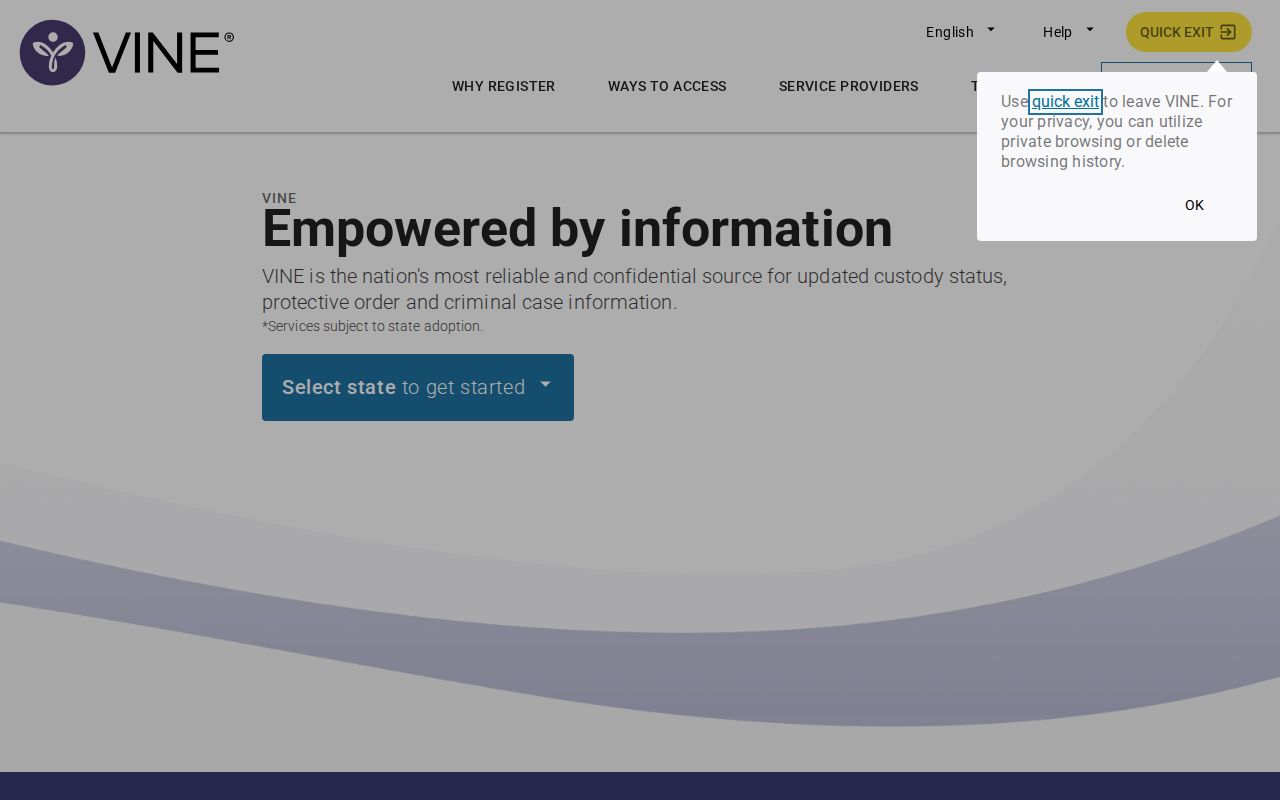
The screen is a starting point, not proof of anyone's status. The matched live record and its reporting agency control the interpretation.
Button names and screen order can change. Use the current labels that appear during the search. For a broader inquiry into a person who no longer appears in a live system, the Braxton County released-inmate search adds court, records-request, state, and federal paths.
Braxton County VINELink Result Fields
West Virginia does not promise one universal set of fields for every VINELink result or a fixed period during which a released result remains searchable. Read only what the matched live record displays. Do not fill missing details from an old roster, another person's record, or a generic VINELink description. The field inventory below separates reliable uses from conclusions the service cannot support by itself.
| Result item | What it can show | Limit |
|---|---|---|
| Name or offender ID | The identity reported by the participating agency | Must be compared with other identifiers |
| Reporting agency | Which custodian supplied the status | Does not cover every other custodian |
| Custody status | The agency's current or changed status wording | Not a certified record |
| Facility or location | The reported WVDCR site when displayed | Movement can create a delay |
| Release or status change | That the reporting episode changed | May not state bond, transfer, or sentence completion |
| Notification confirmation | That the chosen alert method was registered | Keep it because result retention is not fixed |
A “released” label means the reporting agency marked that episode released. Unless the live record expressly says more, it does not prove whether the reason was bond, time served, dismissal, parole, transfer, or sentence satisfaction. The CRJCF release or transfer record supplies the administrative detail, while the court order supplies legal authority.
Note: Record the agency, status text, and check time exactly; a paraphrase can blur the difference between release, transfer, and supervision.
Register Braxton County Release Alerts
Register from the matching record, not from an unmatched search result. West Virginia's official guidance supports telephone and email notification. It does not guarantee every channel that may appear in a generic national guide. A telephone registration uses a four-digit personal identification number chosen by the registrant. That PIN confirms or stops calls and is not the incarcerated person's offender ID.
- Open the correct person's record and choose the available status-notification option.
- Select telephone, email, or both when those choices appear.
- Enter the destination carefully and create a private four-digit PIN for telephone calls.
- Add the notification method, continue, and review the information shown.
- Complete registration and keep the confirmation for later troubleshooting.
West Virginia VINE also accepts telephone access and registration at 1-866-WV4-VINE, or 1-866-984-8463, and the official guidance says help is available around the clock. Register while custody is current when possible. A person who has already disappeared from search may be harder to enroll because West Virginia publishes no guaranteed released-result retention period.
Braxton County VINE Transfer Lag
Transfers have a specific notification quirk. WVDCR states that VINE does not place the call while a person is being moved. Notice occurs after arrival at the new facility. This security-related delay can explain why a name or location seems to change before the expected call arrives. It also shows why the alert should not be treated as a real-time movement tracker.
When timing matters, check the live record again and call the reporting facility. CRJCF can be reached at 304-765-7904. Ask whether staff can confirm that the person was released to the community or transferred. If the answer is a transfer, identify the receiving custodian when that information is public and continue with the proper system. A WVDCR prison move belongs in the DOC offender search, not the regional-jail form.
Braxton County Written Release Notices
West Virginia adds a separate statutory notice layer that should not be collapsed into online VINELink registration. Under West Virginia Code §62-12-23d and WVDCR instructions, a person seeking the specified release or parole-hearing notices must write separately to WVDCR and the West Virginia Parole Board because they are distinct agencies. A written request to DCR also enrolls the requester in VINE.
That arrangement is the distinctive local rule. One VINELink registration should not be described as replacing every statutory notice. Likewise, one letter should not be described as automatically reaching both DCR and the Parole Board. Follow each agency's current instructions, provide the identifying information it asks for, and keep copies of the requests and confirmations.
This written route serves a different purpose from a casual status check. It creates a documented request under the state process, while VINELink provides automated custody updates from participating systems. When parole is involved, the Board's decision date can also differ from physical release because conditions, intake, documents, or other holds may remain.
Note: Check current WVDCR and Parole Board instructions before mailing because office procedures and required request details can change.
Confirm Braxton County VINE Releases
A VINE release is stronger evidence than guessing from roster disappearance, but it remains weaker than a custodian-produced release record. Match the alert to the person and the reporting agency. Then ask CRJCF or WVDCR for the actual release date and time, release type or authority, and whether the event was a community release or transfer. Include the OID, booking date, and case number when known.
Check the court record for the legal cause. Braxton magistrate records can identify initial bail activity, misdemeanor dispositions, and preliminary felony events. Circuit records can show felony sentencing, amended orders, probation, or later case action. The public docket may list a document without supplying it, so request the actual unsealed order from the clerk. A court order and a facility timestamp answer different questions.
Use separate systems for other custody. The WVDCR DOC search may return an active prison or parole record but is not a complete archive after full discharge. BOP handles federal sentenced custody, and ICE ODLS handles its limited immigration-custody scope. The West Virginia State Police registry applies only to people with an active statutory registration duty and is not a general release list.
If the person no longer appears, formal records become more important. Ask WVDCR for the CRJCF booking and release record, the legal custody document, and the applicable time sheet or sentence calculation. State the full name, date of birth or OID, facility, booking date, and date range. Request the actual release time and type separately from any projected date. If the response identifies a transfer, follow the named receiving custodian rather than treating that event as community release.
A later court disposition can also change how the episode is understood. The magistrate search accepts a first name, last name, or case number and can return a filing date, charge, disposition, and document list, but not the documents themselves. WV PASS covers circuit matters. Obtain the actual order from the clerk because a short docket label may not state when CRJCF carried out the release.
Keep the VINELink notice with the agency response and court document. That three-source record preserves who reported the change, when physical movement occurred, and why it was legally authorized without overstating what an automated alert can prove.