
West Virginia VINE Release Coverage
West Virginia’s automated VINE service operates through WVDCR victim services and is available online through VINELink. WVDCR has reported that all ten regional jails were connected to VINE. That statewide layer includes CRJCF, the state-operated regional facility in Braxton County. Coverage should not be extended to every short municipal hold that never entered a participating WVDCR system.
VINE follows the reporting custody episode. A “released” status or release notice means the reporting agency marked that episode released. The label does not, unless the live result says so, distinguish bond, time served, dismissal, parole, sentence completion, or a transfer. A person can leave CRJCF and enter a state prison, another jail, federal custody, or immigration custody.
| VINE event | Reasonable reading | What still needs checking |
|---|---|---|
| In custody | The reporting agency shows an active episode | Exact facility and court case |
| Released | That reporting custody episode ended | Release type and any next custodian |
| Transfer | Movement occurred within or between reporting sites | Arrival and receiving facility |
| No result | No match is visible at the time checked | Identity, lag, retention, and agency record |
Search West Virginia VINELink Releases
Open VINELink, select West Virginia, and choose the offender search. Enter the person’s name or offender ID. A broad name search can return more than one person, so compare all identifiers and the reporting agency before opening or recording a status. The source should say Central Regional Jail, another WVDCR location, or the actual reporting custodian.
Read the exact wording rather than converting it into a stronger claim. Save the date and time of the check, the agency, the displayed status, and any event notice received. West Virginia does not publish a fixed retention period for a released result or a universal list of result fields. A result that later disappears should be followed with a call and a release-record request.
- Select West Virginia from the VINELink jurisdiction choices.
- Open the offender search and enter a name or known ID.
- Compare identifiers before choosing the matching person.
- Record the agency and exact status language.
- Request the custodian’s record when the release type or destination matters.
The official person-search starting point is shown in the VINELink source captured below.
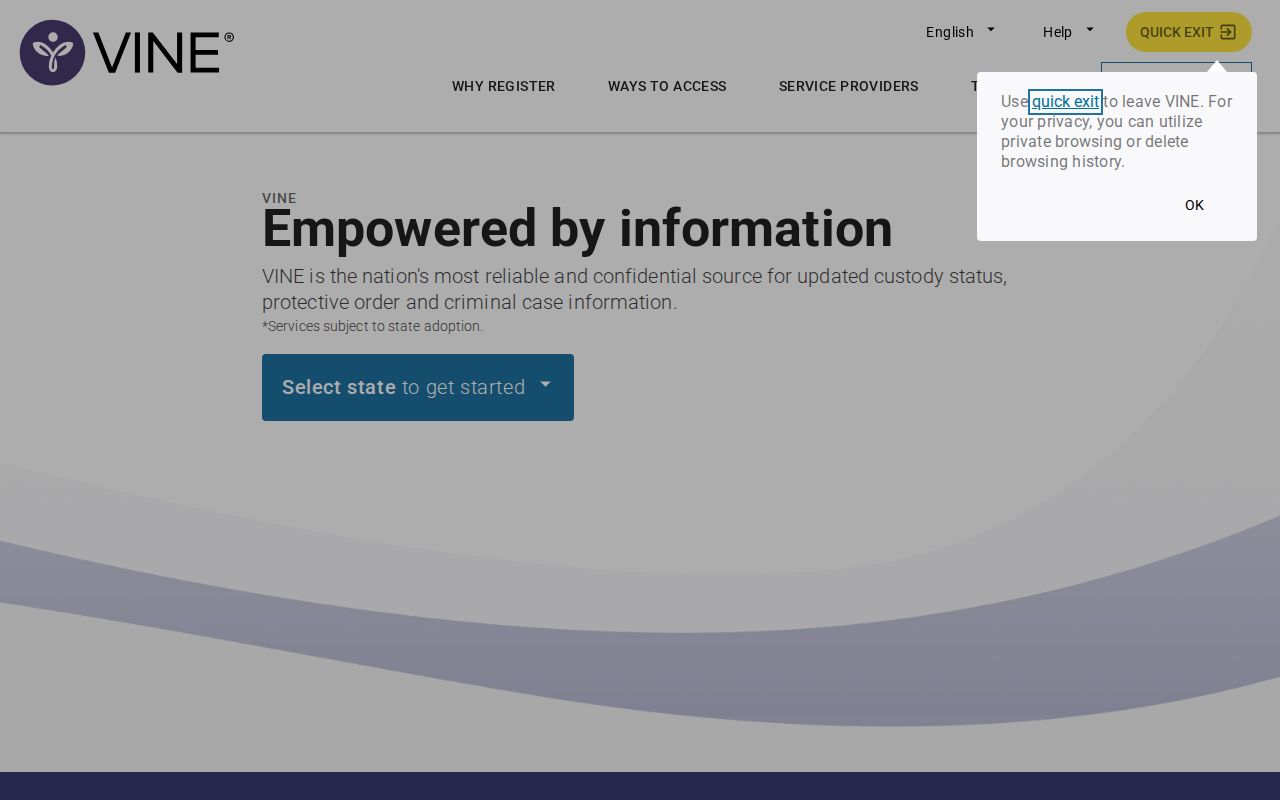
The statewide selection and person match are the start of verification, not a replacement for CRJCF or WVDCR source records.
Register for West Virginia Release Alerts
Registration begins from the correctly matched person record. Choose the status-notification option, select phone or email, enter the destination, and continue through review and confirmation. Telephone registration uses a four-digit PIN chosen by the registrant. The PIN confirms or stops calls and should be easy for the registrant to recall but kept private. It is not an offender number.
Button names can change, so follow the live screen rather than an old guide. West Virginia’s official materials confirm telephone and email channels. They do not promise that every generic VINE feature, such as text or app push, is offered for each record. Complete the final confirmation step and retain the registration information.
- Open the matching custody record.
- Choose the option for status-change notification.
- Select a telephone number or email address.
- Create the four-digit PIN when using telephone calls.
- Review the destination and complete registration.
West Virginia VINE
Automated custody information and assistance
Phone: 1-866-WV4-VINE
Phone: 1-866-984-8463
Availability: 24 hours a day
Register while custody is active when possible. Waiting until after a release creates the risk that no searchable result remains, even though the agency still holds its underlying record.
West Virginia VINE Release Delays
WVDCR describes an important security delay. VINE may not place a call while a person is being moved. Notice can follow after arrival at the next facility. A name may therefore leave one location before the notification arrives. That delay should not be interpreted as a system failure or as proof of community release.
For a CRJCF movement, call the facility and ask whether the event was release to the community or transfer. If WVDCR prison custody follows, use the DOC offender search. If federal facts appear, use BOP or the federal court. If an immigration detainer is involved, use ICE ODLS and treat the later ICE release as a separate event.
Actual movement and legal authority can update at different times. A court may issue an order before facility processing ends. VINE can report a change after movement. The durable release record supplies the administrative date and type. Keep the sources distinct when building a custody timeline.
VINE and CRJCF Release Records
A VINE result is an alerting and status tool, not a certified release document. For Central Regional Jail and Correctional Facility, request the WVDCR booking and legal file when exact details are needed. Identify the person, OID or booking number, date range, facility, court number, and custody episode. Ask for actual release or transfer date and time, event type, authority, and destination agency if public.
The court provides the legal reason. Braxton Magistrate Court handles many first bail matters, misdemeanors, and preliminary felony proceedings. The Circuit Court of Braxton County holds felony indictments, sentences, amended orders, and later case action. A VINE status cannot replace the bail, dismissal, sentencing, or revocation order, and a court docket alone may not show the physical exit time.
| Source | Best use |
|---|---|
| VINELink | Specific-person status and notification |
| CRJCF record | Actual release or transfer event |
| Court order | Legal authority for the event |
| DOC offender search | Active prison or state supervision status |
| Receiving locator | Custody that followed a transfer |
The full Braxton County release-record search organizes those routes for older cases and cases in which the current custodian is not yet clear.
VINE and Written Release Notice
West Virginia has a second notification layer that should not be collapsed into an online VINELink registration. Under §62-12-23d and WVDCR guidance, a person seeking the notices specified by law must write separately to WVDCR and the West Virginia Parole Board because the agencies have separate duties. A written request to DCR also enrolls the requester in VINE.
One online registration should therefore not be described as replacing every statutory notice. The online alert tracks custody data from a participating source. The written route addresses legally specified release and parole-hearing notice. Use the current agency instructions and protect private contact information sent with a request.
- VINE registration
- An automated subscription tied to a matching custody record.
- Written DCR notice
- A separate statutory request directed to the corrections agency.
- Parole Board notice
- A distinct request because the Board is a separate agency.
- Custodian record
- The agency-produced document supporting the actual release or transfer.
This combined structure is distinctive in West Virginia. It gives Braxton County users a unified regional-jail notification layer while preserving separate written routes for notices governed by statute.
Released Versus Discharged in VINE
“Released” and “discharged” should not be treated as synonyms. Release can mean departure from one institution. Parole and mandatory supervision place a person outside prison walls while legal oversight continues. Discharge normally refers to the end of the sentence or supervision obligation. VINE’s event label should be read only within the reporting episode.
If parole follows a prison release, the WVDCR DOC search and Parole Services are the stronger active-supervision sources. If probation follows a court disposition, the court order and Braxton probation office are the proper route. VINE does not turn a custody event into a complete supervision history.
A person can also return to custody after an earlier release. A later booking does not make the first release false. Record each episode with its own custodian, admission, status change, and release or transfer. That method preserves the difference between a timely notification and a full historical record.
West Virginia VINE Limits
VINE is not a federal locator. It does not replace the Bureau of Prisons search for a federal sentence or ICE ODLS for immigration custody. It also does not provide the court documents that explain bond or dismissal. Most important, it is not a guaranteed permanent archive of West Virginia released results.
When a match cannot be found, check spelling, identifiers, jurisdiction, and whether the person ever entered a participating system. Then contact the likely facility and request its record. An absence can reflect lag, retention, identity mismatch, a nonparticipating short hold, or a different custodian. It cannot safely be converted into “never detained” or “never released.”
Note: Keep the registration confirmation and any notice received, then verify the event with the agency that reported the custody change.